Death of the Suburb!
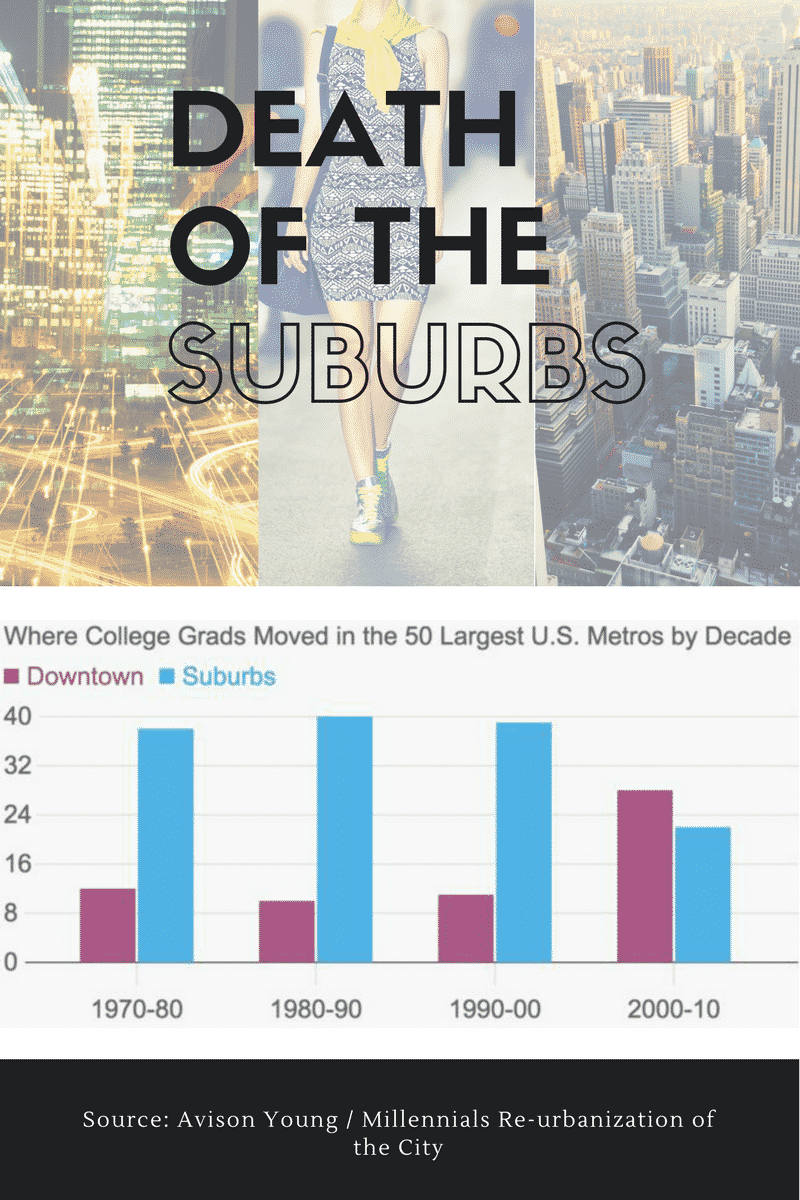
There’s no shortage of articles and information written about the Millennial generation. This much hyped and scrutinized demographic have a unique influence on just about all aspects of life, but perhaps none more surprising than the re-urbanization happening across the country. Currently more than 80% of the US population resides in urban areas, up from 50% in the 1920’s and 66% in the 1960’s. The urbanization of America has always been a gradual process but now it’s accelerating faster than ever.
The connected generation, or those born between 1985 – 2004, have witnessed and influenced the ability of technology to overcome the geographic restrictions experienced by previous generations. These internet age connections mean that people are empowered to work and collaborate from anywhere in the world, yet instead of moving further into rural settings, this generation has migrated to the city center.
“Location, Location, Location” for this generation means being closer to an urban core where job opportunities are concentrated. A fondness for reduced commute time, service based amenities like concert venues and restaurants, and a desire for more conscious lifestyle choices all mean one thing… The suburbs of 1980’s “McMansions” and Cul-De-Sac dwellers are dying.
As millennials continue to disregard the familiar pattern of -growing up, moving to a suburb and raising a family- these city centers just keep growing and providing room for innovation. In the book Where Good Ideas Come From, Author Steven Johnson writes “More connections create exponentially more ideas, and that leads to cities.”
Accordingly, employers of millennials and real estate developers are wise to review the historical cycles and demographic drivers of American cities. The recognition of these buyer needs will keep a company relevant with this highly innovative generation.